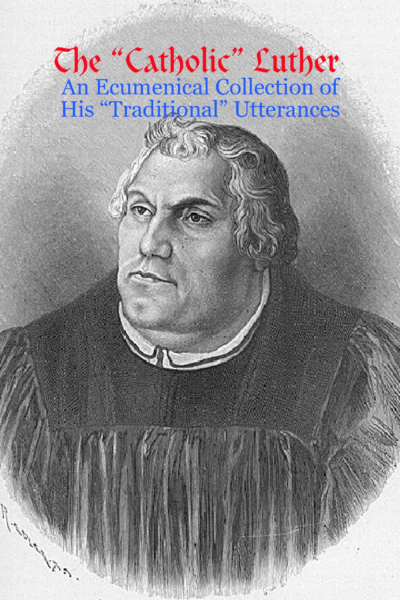
A Catholic analysis of Martin Luther in two parts. Part One: Criticism — Luther’s claims to his own authority, his canon of Scripture, his salvation theology and the “snow-covered dunghill,” his rejection of Purgatory, his blame in the Peasants’ Revolt, and his espousal of capital punishment for heresy. Part Two: Praise and Agreement — 83 pages (about 34% of the book) on Luther’s sacraments, his Mariology, his teaching on good works and sanctification, authoritative Church tradition, crucifixes, and images.
This is not a polemic and not “Luther-bashing.” Dave Armstrong maintains one of the largest web pages on the Internet devoted to Luther and Lutheranism from a Catholic perspective, including some twenty essays defending Luther against bad-faith myths. He admires Luther’s passion and bravery; he disagrees with Luther’s theology where it departs from Catholic orthodoxy.
The book is a straightforward examination of the founder of Protestantism, with concentrated citation of Luther’s own words — “warts and all,” and praise included. “The reader is led through the theological musings of a very complex and confused/confusing man.” — Fr. Peter Stravinskas
Inside this book
- Was Luther a “revolutionary” with fundamental disagreements with the Catholic Church?
- Luther on the canon of Scripture, salvation, the Peasants’ Revolt, and capital punishment for heresy
- Luther on the sacraments: baptismal regeneration, Real Presence, adoration, confirmation, anointing
- Luther on Mary: the Blessed Virgin and Mother of God
- Luther’s “Catholic remnants” — good works, sanctification, authoritative Tradition, crucifixes, images
> “The author is a fine apologist and has often demonstrated how Luther (and other Reformers) were much more Catholic than their spiritual heirs today. In scholarly, critical, and ecumenical fashion, the reader is led through the theological musings of a very complex and confused/confusing man. Particularly worthwhile is the treatment of Luther’s Eucharistic theology and his Mariology, where contemporary Protestants could profit greatly from their spiritual forefather.”
> — Fr. Peter Stravinskas, The Catholic Response (Jan/Feb 2009)